
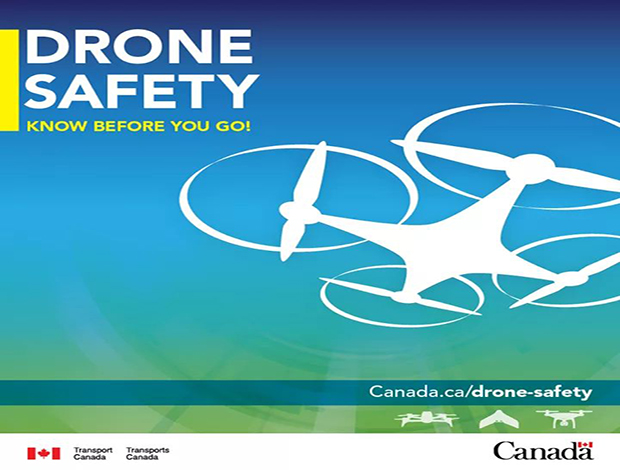
Transport Canada mandates a new law in 2018 for recreational drone flying. In this writeup, I am going to give the necessary information which is required for a drone pilot in this country. It says – Drone pilots must carry a valid drone pilot certificate and only fly drones that are marked and registered. If you are flying a drone that is less than 250 grams, you do not need to register the drone or get a drone pilot certificate.
To be compliant with this law, if anyone flying drones which is more than 250 grams, then there are a couple of steps to be followed –
A. Register the Drone and get the Registration certificate from TC Canada
Go to Transport Canada Drone URL (Given Below) and select the link from Point No 6 to register the drone first with all required information and applicable fees. Within Few Days, you will receive a drone registration with a number. Write / Stick this number on your Drone.
Next step, be prepared for the Drone Exam (Basic or Advance). For most of us, who are flying a drone for recreational or personal photography purpose, the basic exam is sufficient. Advance is required for any commercial usage of the drone.
The Basic exam is really difficult and my observation from the exam which I passed 2 days before in my first attempt is required a general knowledge of (A) Flight Operation in Different Weather Situation (B) Understanding of different Aerodrome and Helipads (C) Understanding of Aerospace Limits and conditions (D) Understanding of altitudes of flight paths (E) Understanding of Weather Controls and Situations (F) Understand Visual Range and its limitations and (G) Different Types of Air Space and Air Traffic Commands
Which is very frustrating in this exam is none of these questions or content are really required for a person who is flying a drone for a recreational purpose. In my exam, the question came from Professional Air Traffic Control Laws, Professional Aviation Terminologies mainly for Helicopters and Aviation Best Practices in Different Weather Situation (Wind Speed, Visual Objections, etc.). We are not going to fly a helicopter or a professional aircraft. TC Canada has completely messed up with the content of this exam which is far beyond from a recreational flying perspective.
Now here are some tips from my experience
A. Do not over-read – The question can come anywhere from a professional aviation sector. A week study is more than sufficient. I studied all basic laws from Transport Canada, Types of Airports, Types of Aircraft and Basic Air Traffic Controls Regulations. My suggestion here is – Understand the question first and think logically. Read a bit about Beyond Visual Range stuffs.
B. Weather-related Question – Apply your general knowledge and basic geography Knowledge
C. Think Logically – There are questions which really do not require any study – example – as a recreational drone flyer, I always give way to a manned aircraft or will always follow air traffic control commands, etc.
D. Know all basic laws – General Safety Guidelines available in TC Canada Site. These are required to know and to practice while flying a drone.
E. Air Traffic Control Laws – These are really difficult and very difficult to predict to study. A bit google search will give you a fair idea about the basic air traffic control laws. Again these are just required to pass the exam, not really useful for recreational drone operators.
Lastly, time management is another area. You will be given 90 minutes to complete 35 Questions. Time was never an issue for me. I was just trying to answer correctly those questions which need basic logic, laws and weather-related questions to score. The questions came from Aeronautics, Air Traffic Controls, and Aviation Acronyms, I was not at all sure.
However, I completed them within the given time and when I submitted my answer sheet, within a few minutes I received a scope of 80% correct, where 60% is required to pass the exam. And I received the following exam result and certificate.
Transport Canada Drone Laws – https://www.tc.gc.ca/en/services/aviation/drone-safety/flying-drone-safely-legally.html